
ALEKS Chemistry Answers
ALEKS Chemistry has no static answer key. Questions are algorithmic, with hundreds of unique instances per question type, so the same topic looks different every time you open it. What carries over is the method: setting up the problem correctly, entering the answer in the form ALEKS expects, and keeping your pie from sliding back after a Knowledge Check. This page covers how the two chemistry courses differ, how Knowledge Checks work, two worked examples, and how we help.
Quick Answer
Yes, we help with ALEKS Chemistry. Because ALEKS generates new problem instances, there is no answer key to look up. Human experts work your topics, quizzes and exams inside your own account, in both General and Organic Chemistry. A/B grade guaranteed or your money back.
Get a free quote. Most students hear back within hours.
Table of Contents
- General vs. Organic Chemistry
- How Knowledge Checks Work
- Worked Example: Limiting Reagent
- Choosing a Mechanism in Organic
- Where Students Lose Points
- Examples
- How We Help
- FAQ
General vs. Organic Chemistry
The two courses share a platform but little else. Match your assignments to the column that fits:
| General Chemistry | Organic Chemistry | |
|---|---|---|
| Typical work | Calculations: stoichiometry, gas laws, equilibrium, acids and bases, thermochemistry | Drawing and reasoning: structures, mechanisms, stereochemistry, spectroscopy, synthesis |
| Usually taken | First, as the introductory sequence | After General Chemistry |
| Common trouble spots | Significant figures, unit conversions, limiting reagents, redox balancing | The drawing tool, arrow pushing, R/S configuration, SN1/SN2/E1/E2 |
| Our page | ALEKS General Chemistry Answers | ALEKS Organic Chemistry Answers |
Not sure which one you are in? Lots of numerical answers and unit conversions means General Chemistry. Drawing molecules and pushing arrows means Organic. For a broader look at why students struggle, see Is General Chemistry Hard?
How Knowledge Checks Work
ALEKS reassesses you periodically to confirm you still retain topics you have learned. According to McGraw Hill’s ALEKS support center, a Knowledge Check is triggered by any of the following:
| Trigger | Rule |
|---|---|
| Topics and time | After 20 topics are learned and 5 hours are spent in learning mode |
| Learning time | After 10 hours in learning mode |
| Elapsed time | After 30 days without one in Higher Education Chemistry (60 days for other courses) |
| Due dates | Possibly after a module’s completion due date |
If a result suggests you may not retain a topic marked as learned, that topic, and possibly related ones, goes back to the Topic Carousel for more practice. The practical effect is that Chemistry checks arrive sooner than in most ALEKS courses, so progress needs to be locked in with accurate work, not rushed. For a longer look, see how ALEKS is used in college and why ALEKS Chemistry topics take so long.
Worked Example: Limiting Reagent
10.0 g of N2 reacts with 3.00 g of H2 to form NH3. How many grams of NH3 can form, and how much of the excess reagent is left?
- Balance the equation first: N2 + 3 H2 → 2 NH3.
- Convert to moles: 10.0 g N2 / 28.014 g/mol = 0.357 mol, and 3.00 g H2 / 2.016 g/mol = 1.49 mol.
- Find the limiting reagent. 0.357 mol N2 needs 3 × 0.357 = 1.07 mol H2. There is 1.49 mol H2, so N2 is limiting.
- Yield: 0.357 mol N2 × (2 mol NH3 / 1 mol N2) = 0.714 mol NH3, and 0.714 mol × 17.031 g/mol = 12.16 g.
- Report with three significant figures to match the data: 12.2 g NH3.
- Excess H2: 1.49 − 1.07 = 0.42 mol, or about 0.84 g left over.
Comparing grams instead of moles is the most common way to pick the wrong limiting reagent, and rounding intermediate values early shifts the final digit. Keep full precision until the last step.
Choosing a Mechanism in Organic
Substitution versus elimination is a judgment call built from three clues: the substrate, the nucleophile or base, and the solvent. A common starting guide:
| Situation | Usually Favors |
|---|---|
| Primary substrate, strong nucleophile | SN2, one step with inversion |
| Tertiary substrate, weak nucleophile, polar protic solvent | SN1 and E1, through a carbocation |
| Tertiary substrate, strong base | E2, one step with anti-periplanar geometry |
| Secondary substrate | Depends on the base, nucleophile, solvent and temperature, so read all three clues |
This is a starting point, not a rule set. Your textbook and instructor may weight the factors differently.
Where Students Lose Points
| Mistake | What Happens | The Check |
|---|---|---|
| Unbalanced equation | Every mole ratio after it is wrong | Balance first, then count atoms on both sides |
| Grams instead of moles | The wrong limiting reagent is chosen | Convert everything to moles before comparing |
| Significant figures and units | A correct calculation can still be marked wrong when the units or digits do not match what the problem asks for | Read the entry instructions on each problem |
| Rounding too early | The last digit drifts | Carry extra digits and round once at the end |
| ICE table errors | A sign error in the change row breaks the equilibrium expression | Substitute back and confirm Q equals K |
| Arrow direction in mechanisms | Arrows must start at the electron source, which is a lone pair or a bond, and point to where the electrons go | Trace each arrow from source to destination |
| R/S assignment | Priorities assigned in the wrong order flip the label | Rank by atomic number, then orient the lowest priority away from you |
ALEKS Chemistry Examples
Recent ALEKS Chemistry assignments:
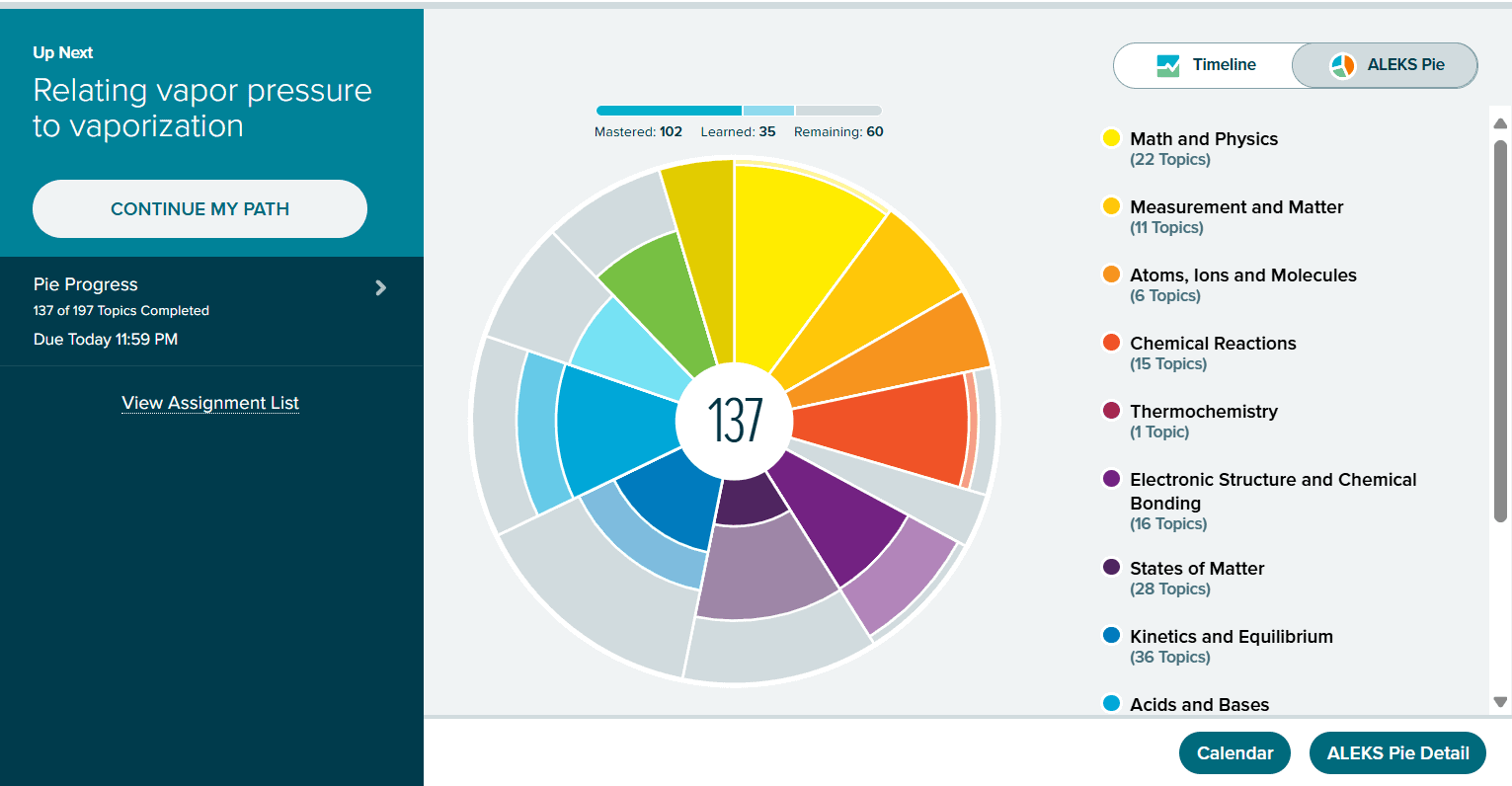
Chemistry pie progress
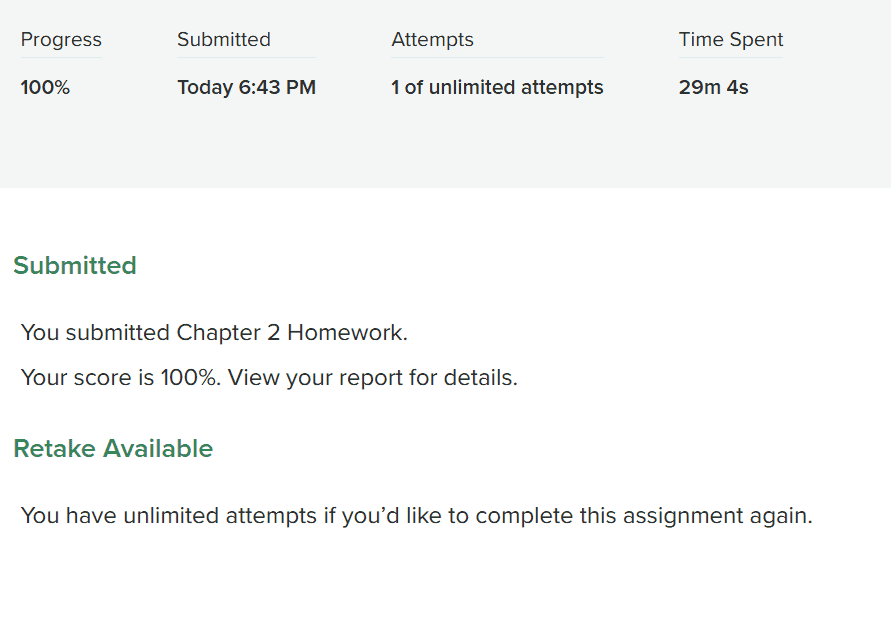
General Chemistry homework, 100%
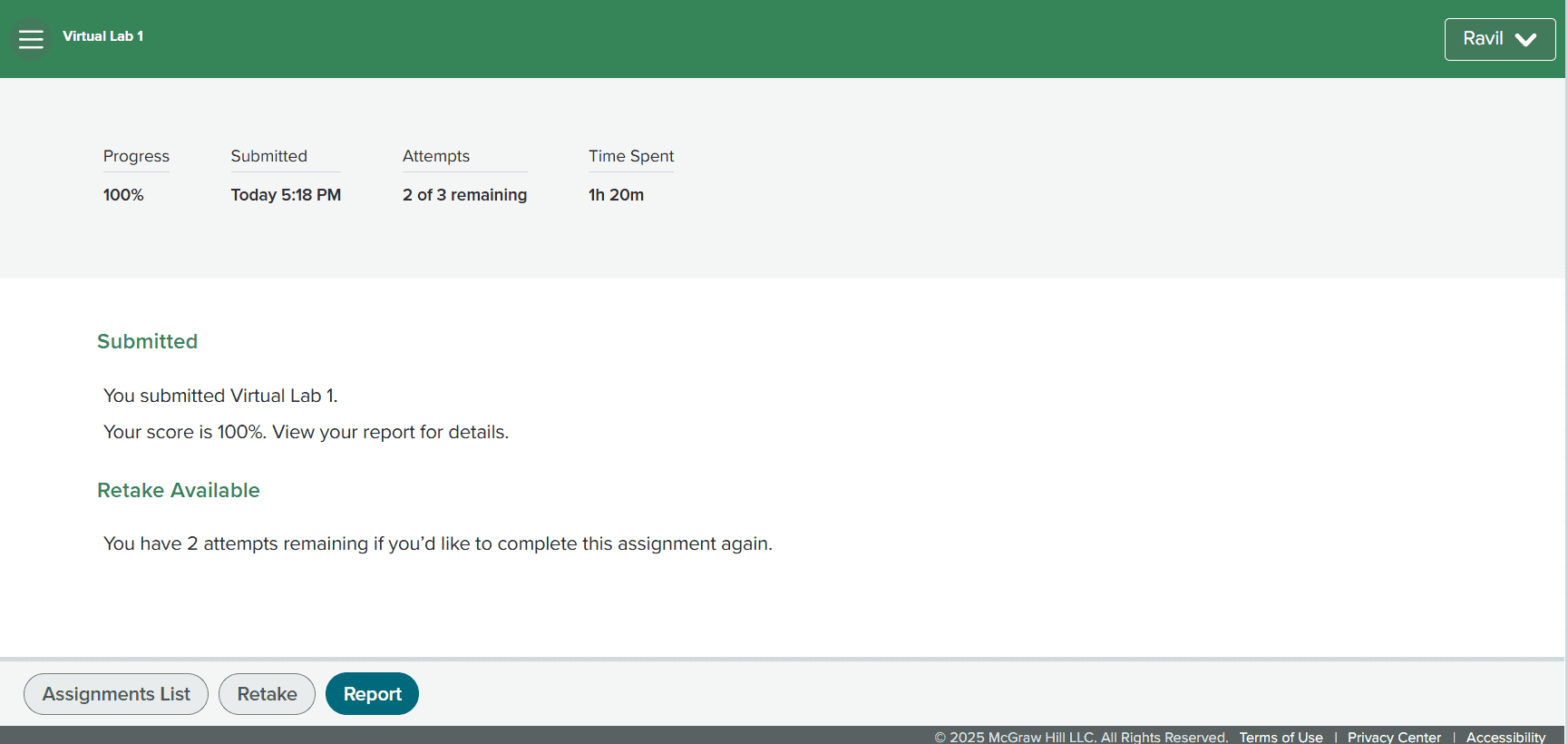
Virtual lab, 100%
How We Help
Every assignment we complete is done by a human expert working inside your ALEKS account. Here’s why we use human experts instead of AI. For ALEKS Chemistry, that means:
- Topics, quizzes and exams worked in General or Organic Chemistry, wherever you are in your pie
- Drawing-tool answers built correctly, including mechanisms and structures
- Answers entered in the format ALEKS expects, with units and significant figures handled
- Knowledge Check timing kept in mind when work is scheduled. For proctored assessments, see our proctored exam help.
All work is covered by our A/B grade guarantee. Send your course, how much of the pie remains and your deadline when you request a quote, and see our pricing page for starting rates.
ALEKS Chemistry FAQ
Can you pick up partway through my ALEKS pie?
Yes. We can take over from wherever you are, whether that is a few topics or the full course. A screenshot of your pie and your deadline help us quote accurately.
How often does ALEKS Chemistry give Knowledge Checks?
According to McGraw Hill, a Knowledge Check can come after 20 topics and 5 hours of learning, after 10 hours of learning, or after 30 days without one in Higher Education Chemistry. Your instructor’s module due dates can also trigger one.
What happens to topics I miss on a Knowledge Check?
A topic you may not retain, and possibly related ones, returns to the Topic Carousel for more practice. How many topics return depends on your results.
Why does ALEKS mark a correct-looking chemistry answer wrong?
Usually it is the form: units, significant figures, a formula entered in a different style, or a drawing that does not match the expected structure. Read the entry instructions on each problem before submitting.
How is ALEKS Organic Chemistry different from General Chemistry?
General Chemistry is mostly calculation. Organic Chemistry is mostly drawing and mechanism reasoning, and it uses ALEKS’s drawing tools for structures and arrows. See the table above for a side-by-side comparison.
Do you guarantee grades on ALEKS Chemistry?
Yes. Our A/B grade guarantee covers the work we complete. If we don’t deliver the agreed grade, you get a refund under the terms on that page.
Ready to Finish ALEKS Chemistry?
If Knowledge Checks, significant figures or the drawing tool are costing you progress, we can take it from here. Get your free quote and we’ll reply with clear pricing, usually within hours.