
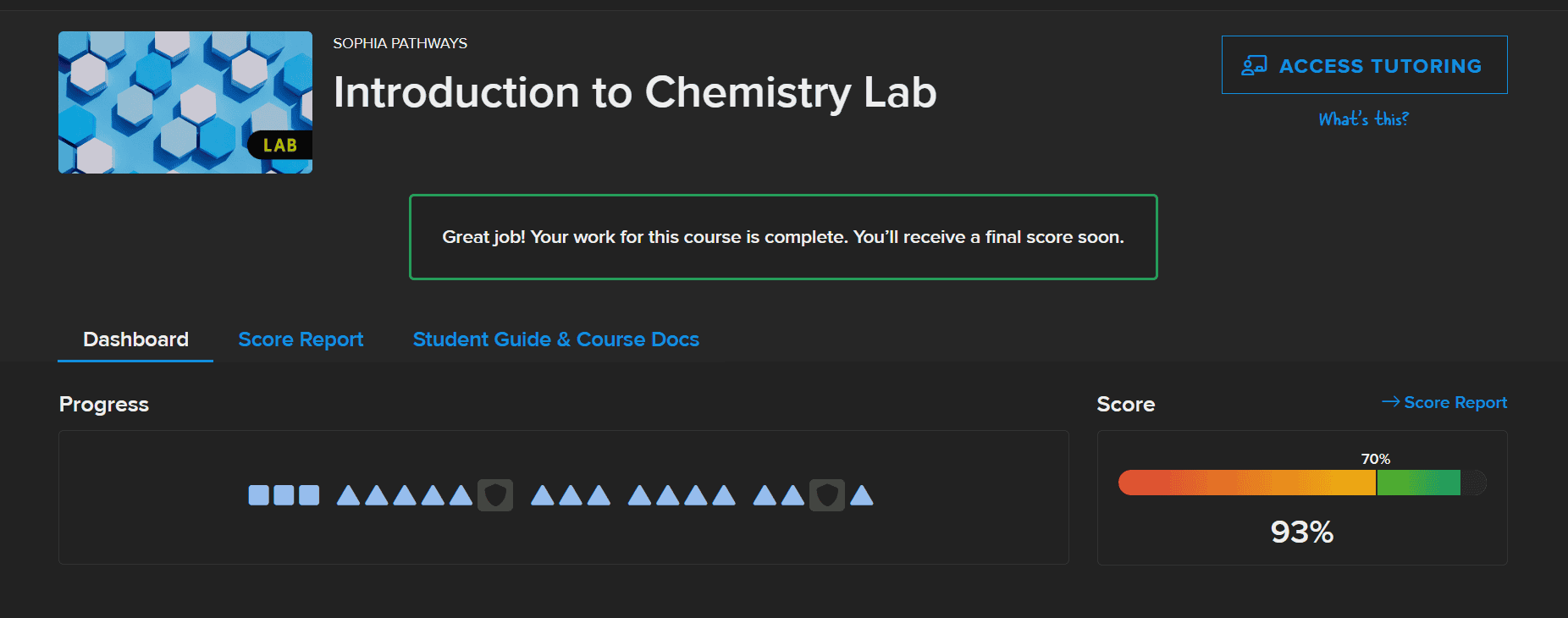
Sophia Chemistry is not a single course — it is two courses taken simultaneously. Introduction to Chemistry (CHEM1001, 3 credits) covers lecture content, while Introduction to Chemistry Lab (CHEM1002, 1 credit) adds 15 Labster virtual lab simulations and two formal Touchstone lab reports. Together they fulfill a 4-credit general chemistry requirement and use your full 2-course Sophia membership limit. This guide covers what each course involves, why the lab course catches students off guard, and how FMMC handles both.
Quick Answer
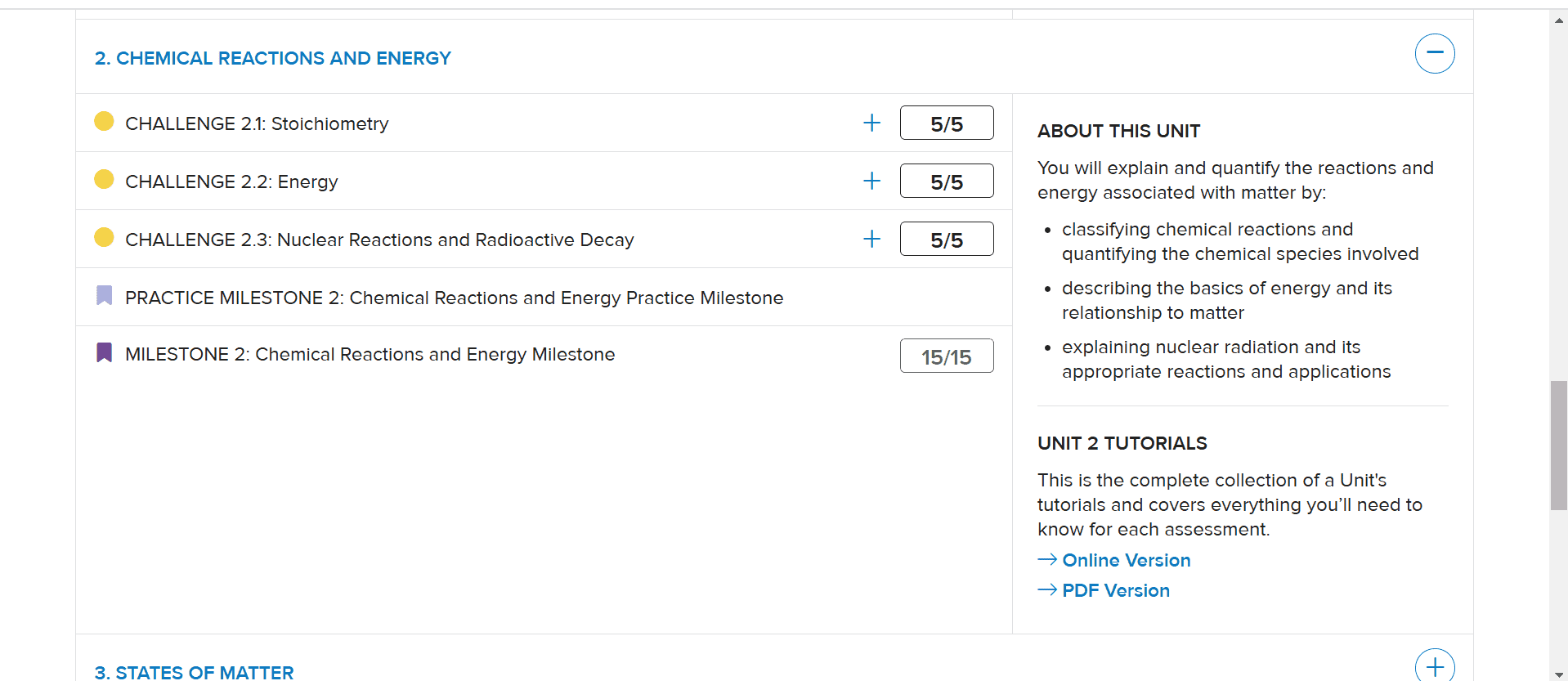
Sophia Chemistry is two courses taken together: CHEM1001 (lecture, 3 credits) and CHEM1002 (lab, 1 credit). Combined they fulfill a 4-credit general chemistry requirement. The lecture course has 12 Challenges and 4 Milestones. The lab course adds 15 Labster virtual lab activities and 2 Touchstone lab reports requiring formal scientific writing. Most students complete both in 4–8 weeks independently; FMMC completes both in 5–10 days with an A/B grade guarantee.
Table of Contents
1) The Two Courses Explained
Sophia recommends taking both chemistry courses simultaneously. Together they use your full 2-course Sophia membership limit, which means you cannot enroll in any other Sophia course while completing chemistry. Understanding the structure of each course before starting helps students plan their time accurately.
| Feature | CHEM1001 — Lecture | CHEM1002 — Lab |
|---|---|---|
| ACE Credits | 3 semester hours | 1 semester hour |
| Platform | Sophia Learning | Sophia + Labster virtual labs |
| Assessments | 12 Challenges + 4 Milestones | 15 Labster Activities + 2 Touchstones |
| Passing threshold | 70% required | 70% required |
| Combined total | 4 ACE credits — satisfies a complete general chemistry requirement | |
Lecture course topics (CHEM1001): Atomic structure, chemical bonding, stoichiometry, gas laws, acids and bases, pH calculations, organic chemistry basics, and biochemistry.
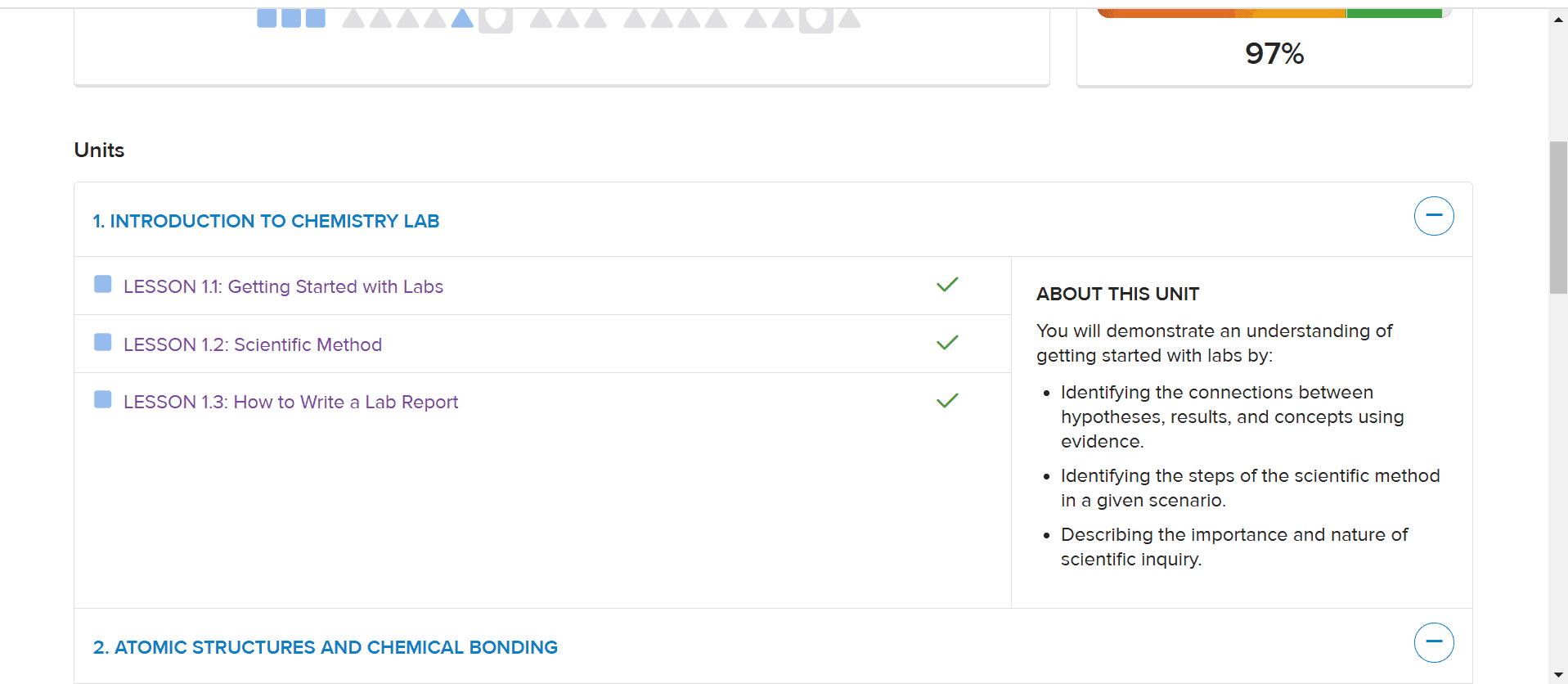
Lab course topics (CHEM1002): Chemistry safety, measurements, atomic structure, periodic table, ionic and covalent bonds, stoichiometry, limiting reactants, ideal gas law, intermolecular forces, solutions, acids and bases, nitrogen cycle, and organic chemistry.
Credit transfer
Both CHEM1001 and CHEM1002 carry ACE credit recommendations and are accepted at partner schools including WGU, SNHU, and Purdue Global. As with all Sophia courses, verify with your institution’s registrar before enrolling that both credits will count toward your specific degree requirements — particularly whether they satisfy a program-specific science requirement versus a general elective slot. See our Sophia legitimacy guide for more on ACE credit transfer.
2) Touchstone Lab Reports
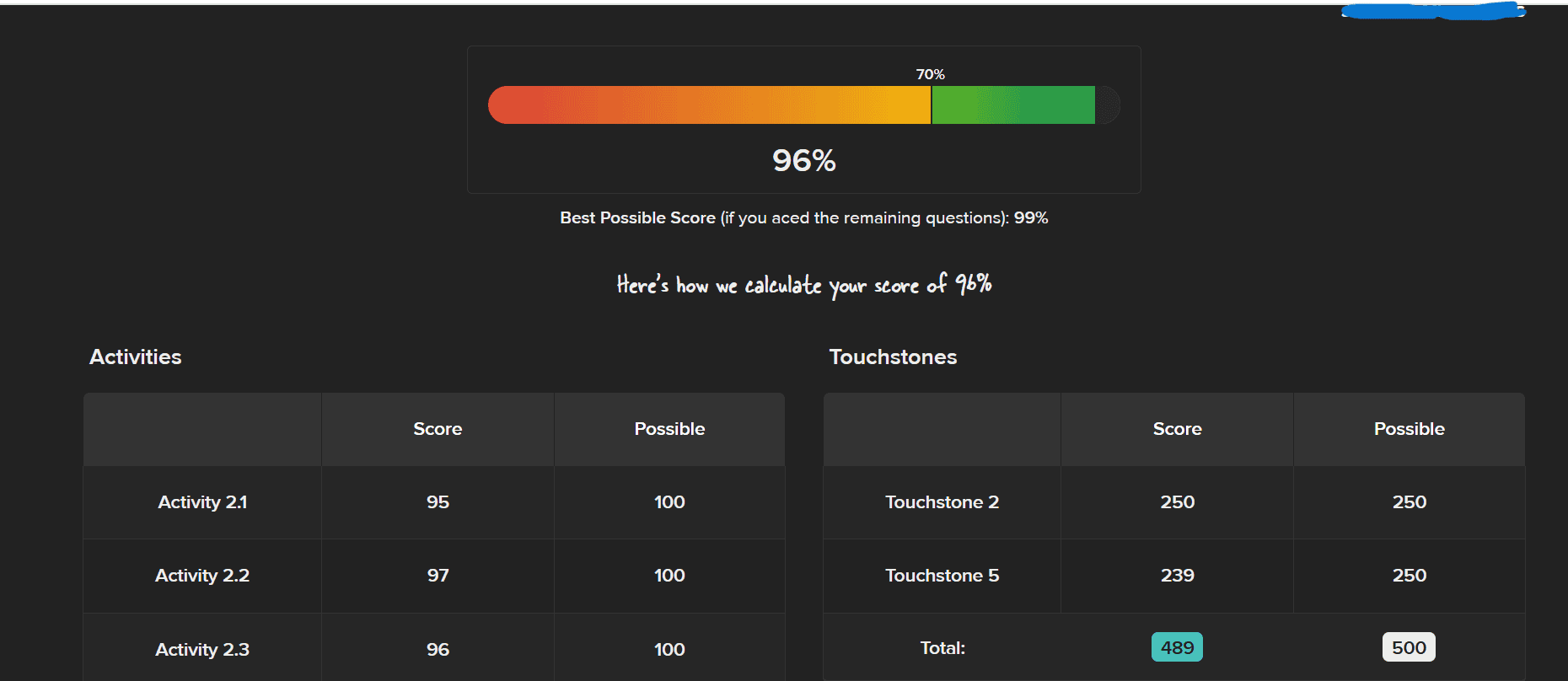
The two Touchstone assignments in CHEM1002 are the most demanding part of Sophia Chemistry. Each is worth 250 points and requires formal scientific writing — not multiple choice or short answers. Students who underestimate these assignments are the ones who stall in the lab course.
Touchstone 2: Ionic and Covalent Bonds
Based on Activity 2.5 of the Labster simulation sequence. Requires a full lab report structure: hypothesis, methodology, data analysis, and conclusions. Students must explain the difference between ionic and covalent bonding and connect experimental observations to theoretical concepts. The grader evaluates scientific reasoning, not just factual accuracy.
Touchstone 5: The Nitrogen Cycle
Based on Activity 5.2 of the Labster sequence. Requires analysis of environmental chemistry and ecological impact, discussion of nitrogen fertilizers and sustainability, and synthesis of chemistry concepts with environmental science. This touchstone tests both chemical understanding and the ability to write in a scientific register about real-world implications.
Why Students Struggle With Touchstones
The Touchstones require scientific writing skills most students have not developed — proper structure, data presentation, evidence-based conclusions, and a formal scientific register. Students who submit answers written in conversational or essay style, or who omit required sections, receive a Not Yet Proficient rating and must revise. Each revision adds a full grading cycle to the timeline. For guidance on AI detection in Sophia touchstone grading, see our Can Sophia Learning Detect AI? page.
3) Why Sophia Chemistry Is Hard
Chemistry consistently ranks among the hardest Sophia courses. The difficulty comes from several compounding factors that affect students differently depending on their background.
You Are Managing Two Courses Simultaneously
Most students do not realize upfront that Sophia Chemistry uses their full 2-course limit. Coordinating lecture content in CHEM1001 with lab activities in CHEM1002 while producing formal lab reports requires more organizational overhead than any other Sophia subject. Students who plan for one course worth of effort will fall behind.
The Calculations Are Real
Stoichiometry, pH calculations, gas law problems, and limiting reactant problems require step-by-step quantitative work. Students who have not done chemistry math in years — or who never studied it rigorously — face a steep relearning curve. Unlike the lighter Sophia humanities courses, you cannot rely on general familiarity with the subject to pass the milestones.
Labster Requires Active Engagement
The 15 Labster virtual lab simulations are not passive video content. Students navigate virtual lab equipment, follow experimental procedures, and answer embedded quizzes throughout each simulation. Each activity takes meaningful time to complete correctly. Students who click through without engaging with the content will not have the data needed for the Touchstone reports.
Scientific Writing Is a Separate Skill
The Touchstone lab reports are graded on scientific writing quality, not just chemical accuracy. A student who understands the chemistry but cannot structure a hypothesis, present data analytically, or write in a formal scientific register will still receive a Not Yet Proficient rating. Most general education students have not been trained in this format.
Students who struggle most: pre-nursing students who have not taken chemistry in years, working adults with limited daily study time, students stuck on stoichiometry or pH calculation steps, and students who have had a Touchstone flagged for rewrite.
4) How FMMC Can Help
FMMC completes both Sophia Chemistry courses from start to finish — or picks up wherever you are currently stuck. Our chemistry experts handle the calculations, Labster simulations, and Touchstone lab reports. All work is backed by our A/B grade guarantee.
Lecture Course (CHEM1001)
All 12 Challenges and 4 Milestones completed by chemistry subject-matter experts. Stoichiometry, pH, gas laws, bonding, and organic chemistry all covered accurately.
Lab Course (CHEM1002)
All 15 Labster virtual lab activities including embedded quizzes. Both Touchstone lab reports written in proper scientific format with hypothesis, methodology, data analysis, and conclusions.
Flexible Options
Both courses together (most common), lecture only, lab only, Touchstone reports only, or picking up mid-course from wherever you currently are. Contact us with your situation.
| Factor | FMMC | AI Tools | Independent |
|---|---|---|---|
| Calculation accuracy | Expert-verified | Frequent errors | Varies |
| Lab report quality | Professional scientific format | Generic, often flagged | Varies by writer |
| Completion time | 5–10 days | Still your time | 4–8 weeks |
| Grade guarantee | A/B or refund | None | None |
Behind on Sophia Chemistry or facing a deadline?
Tell us which courses you need (lecture, lab, or both), where you currently are, and your deadline. We will assess what is achievable and give you a quote. Contact us →
Need Help With Sophia Chemistry?
Tell us which courses you need and your timeline. We will get back to you with a quote.
5) Frequently Asked Questions
Do I need both the lecture and lab courses?
Most degree programs require both for a complete 4-credit chemistry requirement — 3 credits from the lecture course and 1 from the lab. Sophia recommends taking them simultaneously. Confirm with your institution’s registrar that both will transfer and what each counts toward before enrolling. We regularly complete both courses for students at WGU, SNHU, and Purdue Global.
How long does it take to complete both Sophia Chemistry courses?
On your own, expect 4–8 weeks of consistent work given the volume of Labster simulations, calculation-heavy milestones, and Touchstone lab reports. FMMC completes both courses in 5–10 days. See our Sophia completion time guide for context on how chemistry compares to other Sophia subjects.
Can FMMC handle the Labster virtual lab simulations?
Yes. Our chemistry experts are experienced with Labster’s virtual lab platform and complete all 15 CHEM1002 activities including the embedded quizzes within each simulation. Labster requires active navigation of virtual equipment and experimental procedure — it is not passive content that can be skipped.
Do you write the Touchstone lab reports?
Yes. We write both Touchstones — Ionic and Covalent Bonds (based on Activity 2.5) and The Nitrogen Cycle (based on Activity 5.2) — in proper scientific format with hypothesis, methodology, data analysis, and conclusions. Lab reports are written by chemistry subject-matter experts, not generated by AI tools. For more on how Sophia evaluates Touchstone submissions, see our Can Sophia Learning Detect AI? guide.
What if I only need help with part of the course?
We offer flexible options. Common partial-help requests include: Touchstone lab reports only, the lab course only (CHEM1002), or picking up from wherever you have already progressed. Contact us with what you have already completed and what you need finished.
Will AI tools work for Sophia Chemistry?
Using AI tools for Sophia Chemistry carries meaningful risk. AI tools make calculation errors on stoichiometry, limiting reactant, and pH problems where a wrong setup produces wrong answers across multiple steps. For the Touchstone lab reports, AI-generated submissions are frequently identified by graders and returned for rewrite, adding grading cycles to your timeline. See our Can Sophia Learning Detect AI? page for the full picture.
Will my school accept Sophia Chemistry credits?
Both CHEM1001 and CHEM1002 carry ACE credit recommendations and are accepted at partner schools including WGU, SNHU, and Purdue Global. Non-partner institutions evaluate on a case-by-case basis. Always verify with your registrar before enrolling — specifically ask whether each course satisfies a program-specific science requirement or only a general elective slot. See our Sophia legitimacy guide for more on credit transfer.
What if I have already started the courses?
We can pick up mid-course from wherever you currently are. Tell us which activities and milestones you have already completed and we will handle the remaining work. This is a common scenario for students who completed the Labster simulations but are stuck on the Touchstone reports, or who finished CHEM1001 and need help with CHEM1002.