ZyBooks Answers & Help
We Do ZyBooks Homework, Challenges, Quizzes, Exams
Struggling With ZyBooks Assignments?
ZyBooks creates unique challenges through its interactive HTML-based platform that combines textbook content with mandatory participation activities, challenging coding exercises, and auto-grading systems with zero tolerance for format variations. Unlike traditional homework platforms, ZyBooks requires continuous engagement with interactive animations, embedded questions throughout readings, and challenge activities with hidden test cases that students can’t see before submission. The platform’s randomization prevents answer sharing between classmates, auto-grading rejects correct answers for minor format issues, and time-consuming interactive elements make quick completion impossible—creating frustration even for students who understand the underlying concepts.
✓ All Assignment Types | ✓ Coding + Math + Engineering | ✓ A/B Grade Guarantee
Quick Navigation
- • What Is ZyBooks Platform
- • Understanding ZyBooks Assignments
- • Why ZyBooks Is So Difficult
- • Computer Science Challenges
- • Mathematics Challenges
- • Engineering & Physics Challenges
- • ZyBooks vs Other Platforms
- • Top 7 ZyBooks Mistakes
- • Courses We Cover
- • How Expert Help Works
- • Frequently Asked Questions
Expert ZyBooks Answers: Challenge Activities, Labs & Homework Help
ZyBooks represents a fundamentally different approach to coursework compared to traditional homework platforms. Rather than separating textbook reading from problem sets, ZyBooks embeds mandatory interactive questions throughout digital textbook chapters, requires students to manipulate animations and diagrams, and uses challenge activities with hidden test cases that reveal themselves only after submission. This integrated platform appears across computer science, mathematics, engineering, and physics courses at universities nationwide, creating specific challenges that don’t exist with conventional homework systems like MyMathLab or WebAssign.
This comprehensive guide explains how ZyBooks works, why it creates unique difficulties for students who understand underlying concepts but struggle with platform-specific mechanics, what differentiates computer science coding challenges from mathematics symbolic entry, and when professional assistance becomes the practical solution for maintaining grades while managing multiple courses and responsibilities.
What Is ZyBooks? Interactive Platform Overview
ZyBooks is an interactive, web-based learning platform that replaces traditional textbooks with HTML-based digital chapters containing embedded animations, interactive diagrams, and mandatory participation questions integrated directly into reading material.
Core Platform Features
Interactive HTML Textbooks
Unlike PDF textbooks or static web pages, ZyBooks chapters require active engagement:
- Embedded animations: Students must click through step-by-step visualizations
- Interactive diagrams: Drag-and-drop, clickable elements demonstrating concepts
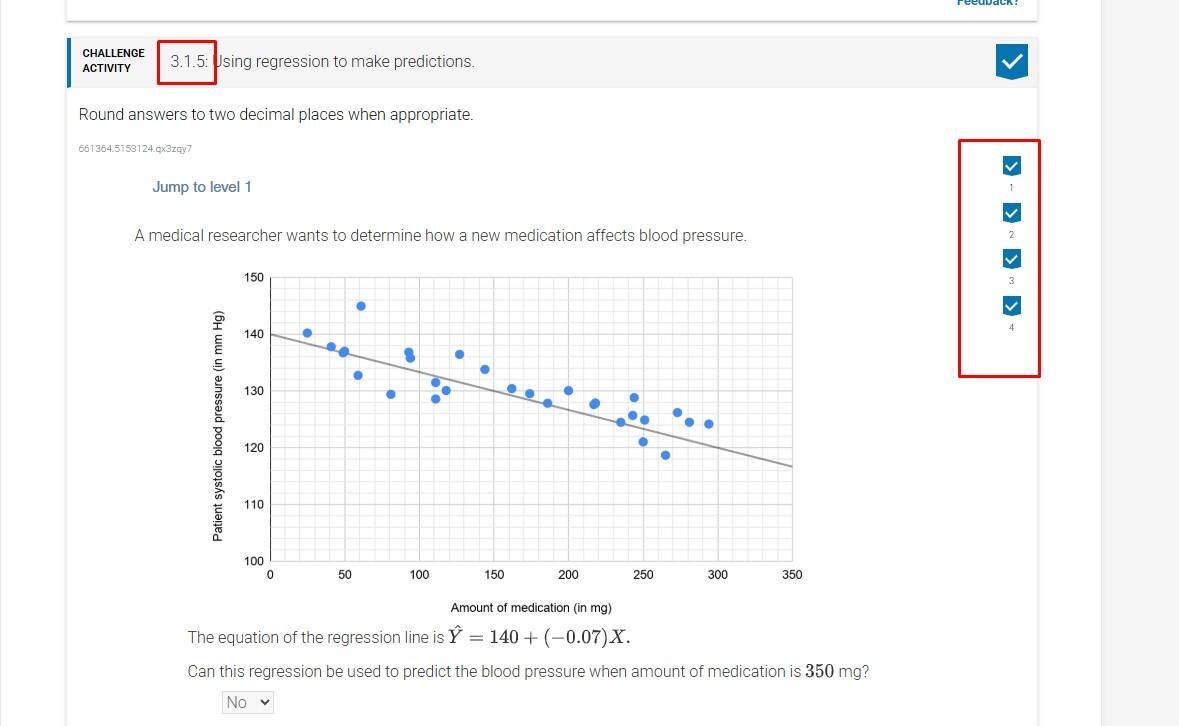
- Participation activities: Simple questions embedded every few paragraphs
- Challenge activities: Complex problems testing comprehensive understanding
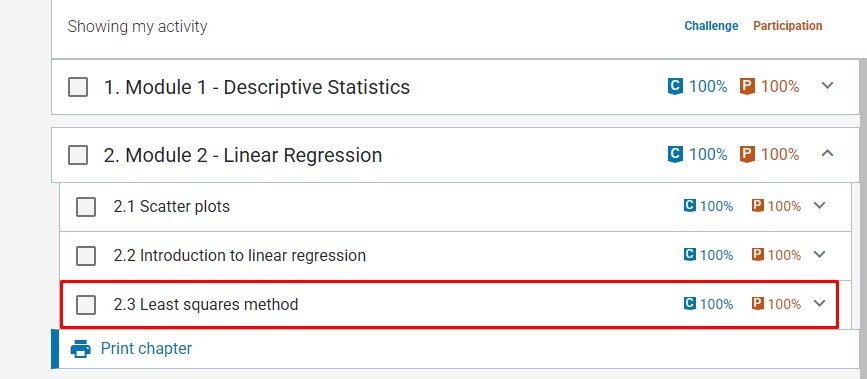
Completion Tracking System
ZyBooks tracks engagement through percentage-based completion metrics:
- Participation completion: Percentage of embedded questions answered
- Challenge completion: Percentage of challenge activities solved correctly
- Reading completion: Tracking which sections students accessed
- Time tracking: How long students spend in each section
Auto-Grading Algorithm
ZyBooks uses automated grading with specific characteristics:
- Immediate feedback on participation activities
- Hidden test cases for challenge activities (students can’t see all requirements upfront)
- Format-sensitive answer checking (rejects correct answers with wrong formatting)
- Multiple submission attempts allowed with point penalties
Who Uses ZyBooks?
ZyBooks appears primarily in:
- Computer Science programs: Python, Java, C++, Data Structures courses
- Mathematics departments: Calculus, Linear Algebra, Discrete Math
- Engineering disciplines: Electrical circuits, Mechanical dynamics, Thermodynamics
- Physics courses: Mechanics, Electricity & Magnetism
Universities adopt ZyBooks because interactive content theoretically improves engagement compared to passive reading, and integrated assessment reduces instructor grading burden through automation.
How ZyBooks Differs From Other Platforms
Key distinctions:
- Reading integration: Questions embedded in textbook content, not separate homework
- Interactivity requirement: Must manipulate animations and diagrams, can’t skip
- Continuous assessment: Every section contributes to grade, not just major assignments
- Randomization: Each student gets different problem variations
ZyBooks Assignment Types: Participation, Challenges & Labs Explained
ZyBooks uses three primary assignment categories, each with distinct characteristics and difficulty levels.
Participation Activities
What They Are
Participation activities are simple questions embedded every few paragraphs throughout textbook chapters:
- Multiple choice questions
- Fill-in-the-blank with dropdown menus
- True/false statements
- Short numerical or text responses
- Interactive diagram manipulation
Difficulty Characteristics
While conceptually simpler than challenge activities, participation exercises create frustration through:
- Volume: 50-100+ participation activities per chapter
- Reading interruption: Constant context-switching between reading and answering
- Format sensitivity: Text entries must match expected format exactly
- Time consumption: Completing all participation activities takes 2-4 hours per chapter
Common Issues
- Answer rejection for capitalization differences (“true” vs “True”)
- Numerical precision requirements not clearly specified
- Dropdown menus with similar but subtly different options
- Interactive diagrams requiring exact clicking locations
Challenge Activities
What They Are
Challenge activities are complex problems appearing at section or chapter ends:
- Multi-step coding exercises requiring complete programs
- Mathematical proofs or complex calculations
- Engineering design problems with multiple constraints
- Physics scenarios requiring integration of multiple concepts
Why They’re So Difficult
Challenge activities frustrate students through:
Hidden Test Cases
ZyBooks tests submissions against multiple test cases, but students only see subset initially:
- Visible test cases: Basic scenarios students can see and debug
- Hidden test cases: Edge cases, error handling, special inputs revealed only after submission
- Students pass visible tests but fail hidden ones, with minimal feedback about why
Strict Format Requirements
- Coding output must match expected format exactly (spacing, punctuation, line breaks)
- Mathematical answers require specific simplification or form
- No partial credit for partially correct solutions
Limited Feedback
When submissions fail:
- “Wrong answer” message without specifics
- No indication which test case failed
- No hints about error type (logic vs syntax vs format)
Lab Exercises
What They Are
Labs are extended assignments combining multiple skills:
- Complete programs or systems (200-500+ lines of code)
- Multi-part mathematical proofs
- Engineering design projects with documentation
- Physics experiments with data analysis
Complexity Factors
- Scope: Require integrating concepts across multiple chapters
- Time investment: 5-15 hours typical for completion
- Testing difficulty: Dozens of test cases with complex edge cases
- Documentation requirements: Code comments, explanations, analysis
Why ZyBooks Is So Hard: Auto-Grading & Hidden Test Cases
ZyBooks creates specific challenges that don’t exist with traditional homework platforms.
Format-Sensitive Auto-Grading: Why Correct Answers Get Rejected
Format Hypersensitivity
ZyBooks auto-grader rejects correct answers for minor format variations:
Example: Output formatting
- Expected: “The result is: 42”
- Student outputs: “The result is:42” (missing space) → WRONG
- Student outputs: “The result is : 42” (extra space) → WRONG
- Student outputs: “Result is: 42” (slightly different wording) → WRONG
Example: Mathematical formatting
- Expected: “3/4”
- Student enters: “0.75” → WRONG (wants fraction not decimal)
- Student enters: “6/8” → WRONG (wants simplified form)
- Student enters: “3 / 4” → WRONG (no spaces allowed)
No Partial Credit
Unlike human grading, ZyBooks is binary:
- 99% correct solution with one typo → 0 points
- Correct logic with format error → 0 points
- Right answer, wrong simplification → 0 points
Problem Randomization: Why Classmates Can’t Share Answers
Problem Variations
Each student receives different:
- Numerical values in mathematical problems
- Variable names and inputs in coding exercises
- Scenario specifics in word problems
- Test case parameters
This means classmates can’t share answers—solutions must be genuinely understood and customized.
Minimal Explanation Quality
What ZyBooks Provides
- Brief text explanations (often 2-3 paragraphs)
- Animated visualizations (helpful for visual learners, less so for others)
- Example problems (typically one per concept)
What’s Missing
- Multiple worked examples showing problem variations
- Step-by-step solution strategies
- Common error discussions
- Conceptual bridges between topics
Students report needing external resources (YouTube, Stack Overflow, textbooks) to actually learn material before attempting ZyBooks exercises.
Time-Consuming Interactive Elements
The Interactivity Tax
ZyBooks requires time investment beyond reading and problem-solving:
- Clicking through multi-step animations (can’t skip or speed up)
- Manipulating interactive diagrams repeatedly
- Answering participation questions every few paragraphs (context switching overhead)
- Navigating between sections and subsections
A chapter that would take 1 hour to read in traditional textbook requires 3-4 hours in ZyBooks due to mandatory interactions.
Hidden Requirements Discovery
The Hidden Test Case Problem
Challenge activities reveal only subset of test cases initially. Students discover additional requirements through submission failures:
- Student writes solution passing visible test cases
- Submits and fails hidden test cases
- Receives vague error message
- Must guess what edge case or scenario wasn’t handled
- Revise and resubmit (often multiple cycles)
This trial-and-error approach wastes hours compared to platforms showing all test requirements upfront.
ZyBooks Python, Java & C++ Challenges: Coding & Format Issues
ZyBooks programming exercises create specific difficulties beyond general coding complexity.
Syntax & Whitespace Sensitivity in Python, Java, C++
Common Syntax Rejections
- Whitespace sensitivity: Extra spaces or tabs cause failures
- Naming conventions: Variable names must match specifications exactly
- Function signatures: Parameters must appear in specified order
- Import statements: Must use exact library imports expected
Example: Python String Formatting
Assignment requires printing formatted output.
Expected output: “Name: John, Age: 25”
Student attempts:
- “Name: John, age: 25” → WRONG (lowercase ‘age’)
- “Name: John,Age: 25” → WRONG (missing space after comma)
- “Name:John, Age:25” → WRONG (spacing around colons)
Correct logic, wrong formatting details → 0 points.
Output Format Requirements: Character-by-Character Matching
Expected vs. Actual Output
ZyBooks compares student program output character-by-character against expected output:
- Extra newlines → WRONG
- Missing punctuation → WRONG
- Different capitalization → WRONG
- Additional debug print statements student forgot to remove → WRONG
Example: C++ Output Requirements
Program must output calculation results.
Correct:
The sum is: 15
Student outputs (all wrong):
The sum is 15 // Missing colon Sum is: 15 // Wrong wording The sum is: 15.0 // Integer should not show .0
Debugging Hidden Test Cases: The Blind Testing Problem
The Blind Debugging Problem
Students pass visible tests but fail hidden ones without knowing why:
Visible test case: Input = “hello” → Program works fine
Hidden test case 1: Input = “” (empty string) → Program crashes
Hidden test case 2: Input = “a” (single character) → Wrong output
Hidden test case 3: Input with spaces → Format error
Student receives “Failed 3 of 6 test cases” with no indication which scenarios failed.
Common Programming Challenges by Language
Python ZyBooks Issues
- Indentation sensitivity beyond standard Python requirements
- String formatting requirements (f-strings vs .format() vs %)
- List/dictionary output formatting
- Input handling for various data types
Java ZyBooks Issues
- Scanner input parsing strictness
- println() vs print() for specific outputs
- Exception handling requirements not specified in visible tests
- Class/method naming conventions
C++ ZyBooks Issues
- Cout precision for floating point numbers
- Memory management requirements
- Pointer dereferencing format expectations
- Vector vs array usage specifications
ZyBooks Math Help: Calculus, Algebra & Statistics Format Requirements
ZyBooks mathematics exercises demand specific answer formats that reject mathematically equivalent responses.
Math Answer Formatting: Fractions, Simplification & Notation
Simplification Standards
ZyBooks expects answers in specific simplified forms:
Example: Algebraic expressions
- Problem: Simplify 2x + 3x
- Correct: 5x
- Student enters: 2x + 3x → WRONG (wants simplified)
- Student enters: x * 5 → WRONG (wants 5x not x * 5)
- Student enters: 5*x → WRONG (no multiplication symbol)
Example: Fractions
- Expected: 3/4
- Student enters: 6/8 → WRONG (wants simplified form)
- Student enters: 0.75 → WRONG (wants fraction not decimal)
- Student enters: 3÷4 → WRONG (wants / not ÷)
Calculus Answer Requirements: Derivatives, Integrals & Constants
Derivative Formatting
- Prime notation: f'(x) vs f'(x) vs df/dx
- Partial derivatives: ∂f/∂x formatting requirements
- Chain rule expressions: Order of terms matters
- Constant placement: 2x vs x*2 vs x2
Integration Formatting
- Constant of integration: Must include “+ C” when required
- Bounds formatting: Definite integral evaluation format
- Trigonometric forms: sin²(x) vs sin(x)² vs (sin(x))²
Example: Integration Problem
Find ∫2x dx
Correct answer: x² + C
Student attempts (all mathematically correct but rejected):
- x² → WRONG (missing + C)
- x^2 + C → WRONG (wants ² not ^2)
- C + x² → WRONG (constant must be last)
- x*x + C → WRONG (wants simplified x²)
Linear Algebra Challenges
Matrix Entry Format
ZyBooks requires specific matrix notation:
- Bracket style: [1 2; 3 4] vs [[1,2],[3,4]]
- Spacing requirements
- Row vs column vector orientation
- Decimal vs fraction elements
Vector Notation
- <1, 2, 3> vs [1, 2, 3] vs (1, 2, 3)
- i, j, k notation vs component notation
- Magnitude representation
Statistics and Probability Issues
Decimal Precision
Statistics problems require specific decimal places:
- Problem might want 4 decimal places: 0.2543
- Student enters: 0.25 → WRONG (insufficient precision)
- Student enters: 0.254 → WRONG (one digit short)
- Student enters: 0.25432 → WRONG (too many digits)
- Student enters: .2543 → WRONG (must include leading zero)
Probability Notation
- Percentage vs decimal: 25% vs 0.25
- Fraction vs decimal: 1/4 vs 0.25
- Scientific notation requirements
ZyBooks Engineering & Physics: Units, Sig Figs & Circuit Problems
Engineering and physics ZyBooks courses combine mathematical rigor with unit conversion strictness and significant figure requirements.
Unit Conversion & Formatting Strictness
Required Unit Formats
ZyBooks demands answers in specific units with exact formatting:
Example: Distance calculation
- Correct answer: 5 meters
- Student enters: 5m → WRONG (needs space and full word)
- Student enters: 5 m → WRONG (wants “meters” not “m”)
- Student enters: 500 cm → WRONG (wants meters not centimeters)
- Student enters: 5.0 meters → WRONG (doesn’t want decimal)
Engineering Unit Complexity
Engineering problems involve compound units:
- N/m² vs Pa (pressure units, may require specific form)
- kg⋅m/s² vs N (force units)
- W vs J/s (power units)
- Ordering of compound units (m/s² vs s⁻²m)
Significant Figures Requirements in Physics & Engineering
Precision Matching
Physics calculations require specific significant figures:
Example: Acceleration calculation
Given data with 3 significant figures, answer must also have 3:
- Calculated value: 9.81245 m/s²
- Student enters: 9.81245 → WRONG (too many sig figs)
- Student enters: 9.8 → WRONG (too few sig figs)
- Student enters: 9.81 → CORRECT (3 sig figs)
- Student enters: 10 → WRONG (rounds but loses precision)
Scientific Notation Requirements
- When to use: 3.2 × 10⁵ vs 320000
- Coefficient range: Must be 1 ≤ coefficient < 10
- Superscript formatting: 10⁵ vs 10^5 vs 10**5
Engineering Circuit Problems
Electrical Engineering Specifics
- Voltage direction conventions (+ and – terminal specifications)
- Current direction arrows
- Resistance value formatting (5kΩ vs 5000Ω)
- Complex number representation for AC circuits
Example: Ohm’s Law Problem
Calculate voltage across resistor.
Given: I = 2A, R = 5Ω
Calculation: V = IR = 10V
Student answer attempts:
- 10 → WRONG (needs units)
- 10v → WRONG (lowercase v, wants V)
- 10 volts → WRONG (wants V not volts)
- 10V → CORRECT
Mechanical Engineering Dynamics
Vector Component Issues
- Component ordering: (x, y) vs (horizontal, vertical)
- Positive direction conventions
- Magnitude vs component specification
- Angle measurement (degrees vs radians)
Free Body Diagram Requirements
Some ZyBooks exercises require interactive diagram construction:
- Force arrow placement precision
- Arrow length representing magnitude
- Correct angle orientation
- Label positioning
Thermodynamics Challenges
Property Table Lookups
- Interpolation precision requirements
- Phase specification (liquid, vapor, mixture)
- Property units (kJ/kg vs J/kg vs BTU/lb)
- Temperature scale (Celsius vs Kelvin vs Fahrenheit)
ZyBooks vs MyMathLab vs WebAssign: Platform Comparison
How ZyBooks compares to commonly used alternatives:
| Feature | ZyBooks | MyMathLab | WebAssign |
|---|---|---|---|
| Content Integration | Textbook + assignments unified | Separate textbook and homework | Separate textbook and homework |
| Interactivity | Mandatory animations/diagrams | Optional tutorials | Minimal interactivity |
| Format Strictness | Very high (character-level matching) | High (mathematical equivalence recognition) | Medium (some flexibility) |
| Partial Credit | None (all-or-nothing) | Available for multi-part | Available for multi-part |
| Test Cases | Hidden test cases (coding) | All requirements visible | All requirements visible |
| Explanation Quality | Brief, animation-focused | Comprehensive step-by-step | Varies by publisher |
| Time Investment | High (reading + interactions) | Medium (homework focused) | Medium (homework focused) |
| Best For | CS/Engineering courses | Math courses | Physics/STEM courses |
Key Takeaway
ZyBooks’s integrated approach and strict auto-grading create unique frustrations not present in traditional platforms. Students understanding concepts still struggle with platform-specific mechanics.
For help with other platforms, see our guides for MyMathLab, WebAssign, Hawkes Learning, and Knewton Alta.
Common ZyBooks Mistakes: Format Errors, Hidden Tests & More
Mistake #1: Incomplete Participation Activities (30-40% of Grade)
The Mistake: Rushing through chapter reading, answering some participation questions but skipping others.
Why It Happens: With 50-100+ participation activities per chapter, students lose track of which they’ve completed.
Grade Impact: Participation often counts 30-40% of total grade. Missing 20 participation activities = significant point loss.
Prevention: Use ZyBooks completion tracker; aim for 100% participation completion before moving to challenges.
Mistake #2: Output Format Errors (Correct Logic, Zero Points)
The Mistake: Coding solution logic is correct but output formatting differs from expected format.
Example:
- Expected: “Result: 42”
- Student outputs: “Result:42” or “Result : 42” or “The result is 42”
Grade Impact: 0 points despite correct logic. Challenge activities often worth 5-10 points each.
Prevention: Copy expected output format exactly; test with visible test cases before submitting.
Mistake #3: Not Testing Edge Cases (Passing 2 of 6 Tests)
The Mistake: Testing only “normal” inputs, ignoring edge cases like empty strings, zero values, negative numbers.
Why It Happens: Visible test cases often show only typical scenarios; hidden tests check edges.
Example: String processing program works for “hello” but crashes on “” (empty string).
Grade Impact: Passing 2 of 6 test cases = partial credit at best, often 0 points.
Prevention: Test: empty inputs, boundary values (0, -1), single-element cases, maximum values.
Mistake #4: Wrong Simplification (6/8 Instead of 3/4)
The Mistake: Providing mathematically correct answer but not in required simplified form.
Example:
- Problem wants: 3/4
- Student enters: 6/8 (equivalent but not simplified)
- Student enters: 0.75 (decimal instead of fraction)
Grade Impact: Binary grading = 0 points despite correct mathematics.
Prevention: Read instructions carefully for required form; simplify all fractions; watch for fraction vs decimal specifications.
Mistake #5: Missing Units or Wrong Unit Format (Instant Rejection)
The Mistake: Providing numerical answer without units or with wrong unit abbreviation.
Engineering/Physics Example:
- Correct: 5 m/s²
- Student enters: 5 (no units)
- Student enters: 5 m/s^2 (wrong exponent format)
- Student enters: 5 meters per second squared (wants abbreviated form)
Grade Impact: Immediate rejection; 0 points.
Prevention: Always include units; match format from examples exactly (spacing, exponents, abbreviations).
Mistake #6: Insufficient Significant Figures (9.8 vs 9.81)
The Mistake: Rounding answers too much or not enough based on given data precision.
Physics Example:
- Given data has 3 sig figs; answer needs 3 sig figs
- Student enters: 9.8 (only 2 sig figs) → WRONG
- Student enters: 9.8124 (too many) → WRONG
- Correct: 9.81 (3 sig figs)
Grade Impact: Precision errors = wrong answers = 0 points.
Prevention: Count sig figs in problem data; maintain same precision in answer; don’t over-round.
Mistake #7: Ignoring Hidden Test Case Failures (Failed 3 of 6 Tests)
The Mistake: Submitting after passing visible tests without considering what hidden tests might check.
Why It Happens: Students assume visible tests represent all requirements.
Common Hidden Tests:
- Error handling (what happens with invalid input?)
- Boundary conditions (maximum/minimum values)
- Empty or null inputs
- Special characters or formatting
Grade Impact: Multiple submission attempts with point penalties; eventual low scores.
Prevention: Anticipate edge cases; add input validation; test extremes before submitting.
Common Thread: Most ZyBooks mistakes stem from platform-specific requirements rather than conceptual misunderstandings. Students who grasp material still lose points to formatting technicalities.
ZyBooks Courses & Subjects: CS, Math, Engineering, Physics
We provide expert assistance across all ZyBooks subjects and difficulty levels.
Computer Science & Programming
Python Courses
- Introduction to Python: Variables, loops, functions, lists, dictionaries
- Python for Data Science: NumPy, pandas, matplotlib
- Advanced Python: Object-oriented programming, file I/O, modules
Python help beyond ZyBooks: Struggling with Python concepts, debugging, or projects outside ZyBooks? See our comprehensive Python programming help guide for tutorials, debugging assistance, project support, and help across all platforms including Codio, Replit, and traditional assignments.
Java Courses
- Java Fundamentals: Classes, objects, inheritance, polymorphism
- Data Structures in Java: ArrayLists, LinkedLists, trees, graphs
- Advanced Java: Collections framework, generics, exception handling
C++ Courses
- C++ Basics: Pointers, references, memory management
- Data Structures in C++: Vectors, maps, STL containers
- Advanced C++: Templates, operator overloading, file streams
Other CS Topics
- Computer Science Principles
- Algorithms and Complexity
- Web Development (HTML, CSS, JavaScript)
- Database Systems (SQL)
Mathematics Courses
Algebra Through Calculus
- College Algebra: Functions, polynomials, exponential/logarithmic functions
- Precalculus: Trigonometry, sequences, conic sections
- Calculus I: Limits, derivatives, applications of differentiation
- Calculus II: Integration techniques, sequences and series
- Calculus III: Multivariable calculus, partial derivatives, multiple integrals
Calculus help beyond ZyBooks formatting: Struggling with calculus concepts, not just format requirements? Our calculus homework help guide covers conceptual understanding, problem-solving strategies, and all calculus platforms including WebAssign, MyMathLab, and traditional textbook problems.
Advanced Mathematics
- Linear Algebra: Matrices, vectors, eigenvalues, linear transformations
- Differential Equations: First-order, second-order, systems of ODEs
- Discrete Mathematics: Logic, sets, combinatorics, graph theory
Statistics & Probability
- Elementary Statistics: Descriptive statistics, probability, hypothesis testing
- Probability Theory: Distributions, expected value, variance
- Applied Statistics: Regression, ANOVA, chi-square tests
Statistics help across all platforms: Taking statistics on multiple platforms or need conceptual help beyond format issues? See our statistics homework help guide covering MyStatLab, ALEKS Statistics, and all introductory and advanced statistics courses.
Engineering Courses
Electrical Engineering
- Circuit Analysis: DC circuits, AC circuits, Kirchhoff’s laws
- Digital Logic: Boolean algebra, combinational circuits, sequential circuits
- Signals and Systems: Fourier transforms, Laplace transforms
Mechanical Engineering
- Statics: Force systems, equilibrium, trusses, frames
- Dynamics: Kinematics, kinetics, energy methods
- Thermodynamics: First law, second law, cycles, property tables
Other Engineering
- Materials Science
- Fluid Mechanics
- Engineering Economics
Physics Courses
- Physics I (Mechanics): Kinematics, forces, energy, momentum
- Physics II (E&M): Electricity, magnetism, circuits, waves
- Modern Physics: Quantum mechanics, relativity, atomic structure
Physics help beyond ZyBooks: Need physics help across all platforms and textbooks? Our physics homework help guide covers mechanics, electricity & magnetism, and modern physics across WebAssign, Mastering Physics, and traditional problem sets.
Don’t See Your Course? We support virtually all ZyBooks courses. Contact us with your specific course code and we’ll confirm availability.
How to Get ZyBooks Answers & Expert Help
At Finish My Math Class, we provide comprehensive ZyBooks assistance across all subjects and assignment types.
Our ZyBooks Expertise
- Platform mastery: Deep understanding of ZyBooks formatting requirements and auto-grading quirks
- Subject coverage: Experts in CS, math, engineering, physics
- Challenge activities: Experience with hidden test cases and edge case requirements
- Format precision: Knowledge of exact output formatting, units, significant figures
- Time efficiency: Complete assignments faster than students working independently
Service Options
Complete Course Management
Most students choose comprehensive support:
- All participation activities (100% completion)
- All challenge activities
- All lab exercises
- Progress monitoring and deadline tracking
- Communication with you about tricky sections
Targeted Assistance
Some students prefer selective help:
- Challenge activities only (letting students do participation)
- Specific difficult chapters
- Lab exercises only
- Catch-up service when behind schedule
Our Process
- Initial consultation: Share ZyBooks course code and current status
- Custom quote: Pricing based on remaining work and timeline
- Secure access: Safe credential sharing via encrypted channels
- Expert completion: Real humans complete assignments meeting all format requirements
- Quality verification: Double-check all submissions before finalizing
- Grade guarantee: A/B grades or money back
What Sets Us Apart
- Format expertise: We know ZyBooks’s picky requirements (output formatting, units, sig figs)
- Hidden test anticipation: Experience predicting edge cases in challenge activities
- Subject depth: Real programmers for CS, mathematicians for math, engineers for engineering
- Clean completion history: Natural pacing and realistic attempt patterns
- Communication: Updates on progress and any questions that arise
Pricing Structure
ZyBooks assistance pricing depends on:
- Assignment type (participation cheaper than challenges, challenges cheaper than labs)
- Subject complexity (CS coding typically more than math participation)
- Remaining work volume
- Timeline urgency
Typical ranges:
- Single chapter (participation + challenges): $50-$150
- Complete course (all chapters): $400-$900
- Individual lab exercises: $100-$250
See our pricing page for general estimates or contact us for custom quote based on your specific course.
Ready to Escape ZyBooks Frustration?
Stop losing points to format technicalities. Let our experts handle ZyBooks while you focus on actually learning concepts and managing your other courses.
ZyBooks FAQ: Answers to Common Questions
Why do my correct answers get marked wrong in ZyBooks?
ZyBooks auto-grading system is extremely format-sensitive. Correct mathematical or programmatic logic gets rejected for minor format variations: wrong spacing, missing units, incorrect simplification, decimal vs fraction format, capitalization differences. The platform performs character-by-character comparison against expected output, not conceptual equivalence checking. This means answers can be mathematically or logically correct but still receive 0 points due to format mismatches.
Can you complete my entire ZyBooks course?
Yes. We handle complete ZyBooks courses including all participation activities, challenge activities, and lab exercises from start to finish. Our experts work through each chapter systematically, ensuring 100% participation completion and correct challenge solutions. We guarantee A/B grades or full refund. See our grade guarantee policy for complete details.
How do you handle hidden test cases in challenge activities?
Our programmers and engineers have extensive experience anticipating hidden test cases based on problem specifications. We test solutions against typical edge cases: empty inputs, boundary values (0, -1, maximum values), special characters, error conditions, and extreme scenarios. This systematic approach passes hidden tests on first or second submission rather than requiring multiple trial-and-error cycles students typically experience.
What if I’m already behind in my ZyBooks course?
We specialize in catch-up situations. Many students contact us after falling weeks behind due to other course demands or work responsibilities. We assess remaining work, your deadline, and create completion plan. With focused effort, we typically catch up multiple chapters within days. Earlier you contact us, better outcomes we achieve, but we’ve successfully helped students even with 48-72 hour deadlines for substantial remaining work.
Do you support ZyBooks for computer science AND mathematics?
Yes. We have separate expert teams for different subjects: experienced programmers handle Python, Java, C++ courses; mathematicians handle calculus, linear algebra, statistics; engineers handle physics, circuits, thermodynamics. Each expert understands both the subject matter AND ZyBooks platform-specific requirements including format strictness, hidden test patterns, and assignment types. This specialized approach ensures quality across diverse courses.
Will ZyBooks detect that someone else did my work?
ZyBooks cannot detect human completion by different person. Platform tracks completion timing, submission attempts, and answer correctness—not biometric indicators. We use realistic pacing patterns (not suspiciously fast completion), natural attempt patterns on challenge activities, and professional solutions that don’t trigger plagiarism concerns. Thousands of students have used our services without detection issues. Work completion appears identical to student doing their own work.
Can I get help with just challenge activities while doing participation myself?
Absolutely. Many students prefer handling simple participation activities themselves while outsourcing time-consuming challenge activities and labs. We offer flexible service options: complete course management, challenges and labs only, specific difficult chapters, or even individual assignments. Pricing adjusts based on scope of work. Contact us to discuss which option best fits your situation and budget.
How quickly can you complete ZyBooks assignments?
Timeline depends on assignment volume and complexity. Single chapter (participation + challenges) typically completes within 24-48 hours. Complete courses require 1-2 weeks for natural pacing that avoids platform flags. Rush situations possible for urgent deadlines—we’ve completed multiple chapters in 24-72 hours when necessary with expedited pricing. During consultation, we provide realistic timeline estimates based on your remaining work and deadline constraints.
What if I need help with other homework platforms besides ZyBooks?
We support multiple platforms. See our guides for MyMathLab, WebAssign, Hawkes Learning, MyOpenMath, Knewton Alta, WileyPLUS, MyStatLab, and MindTap. If taking multiple courses across different platforms, we can handle all simultaneously with single point of contact coordinating everything.
Do you guarantee specific grades for ZyBooks?
Yes. We offer A/B grade guarantee for complete ZyBooks course management—if we handle your entire course and you don’t receive at least a B final grade, we refund your payment. This guarantee reflects our experts’ platform mastery and subject competency. Applies only to complete course services, not individual assignments. See our grade guarantee page for specific terms and rare exclusion circumstances.
Stop Fighting ZyBooks Format Requirements
You understand the concepts. You shouldn’t lose points to spacing errors, unit formatting, or hidden test cases. Let our experts handle ZyBooks’s technical requirements while you focus on actual learning and your other responsibilities.
There are many reasons why students need help with their coursework. In any case, it is never too late to ask for help. So, what are you waiting for? Let’s connect!