
Sophia Learning Chemistry Help & Answers | Lecture + Lab
Quick Answer
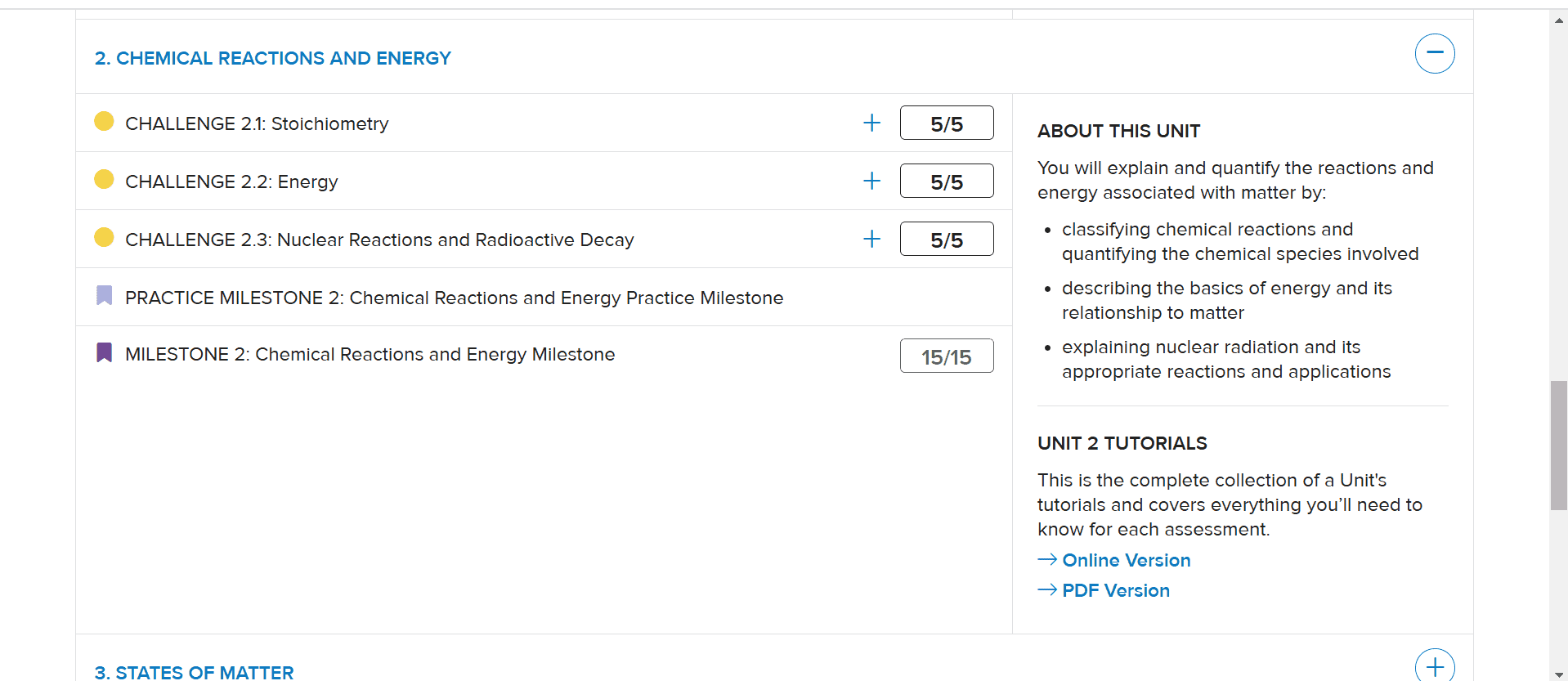
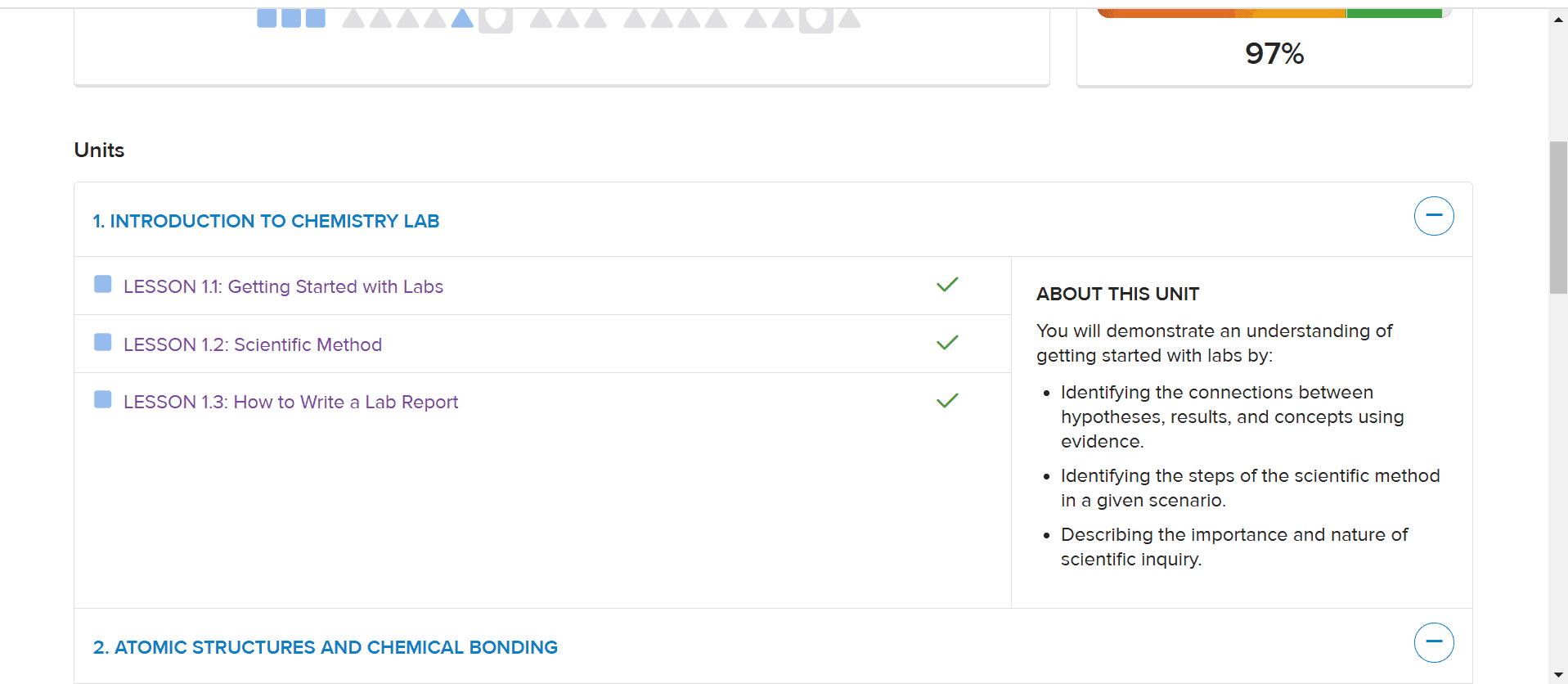
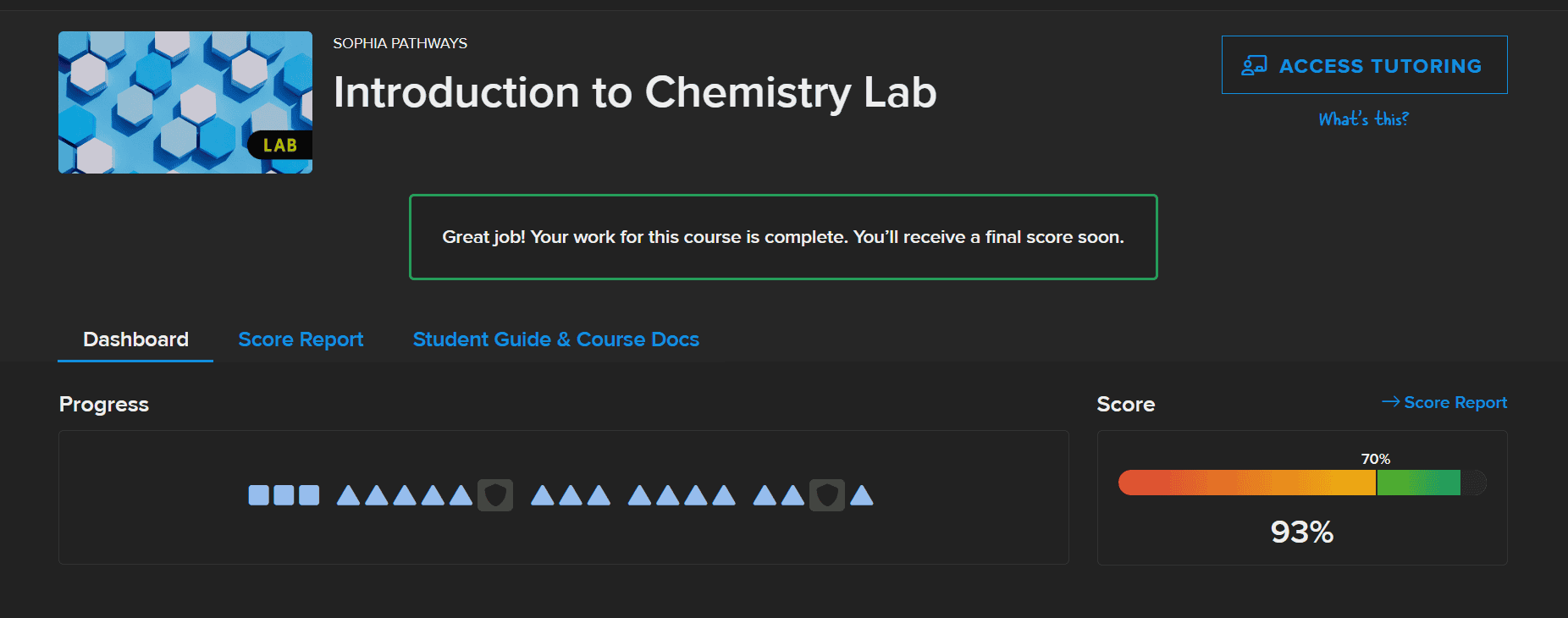
Sophia Chemistry is actually two courses taken together: Introduction to Chemistry (CHEM1001, 3 credits) and Introduction to Chemistry Lab (CHEM1002, 1 credit). Combined, they fulfill a 4-credit general chemistry requirement. You’ll complete 12 Challenges, 4 Milestones, 15 Labster virtual labs, and 2 Touchstone lab reports — all while using your full 2-course Sophia limit.
We complete both courses together in 5-10 days with guaranteed A/B grades. Real chemistry experts, professional lab reports, zero AI detection risk.
A/B Guarantee | Both Courses | 5-10 Days
On This Page
Looking for other Sophia courses? See our hub: Sophia Learning Help & Answers
The Two Courses Explained
Sophia recommends taking both chemistry courses simultaneously for the full learning experience. Together, they use your full 2-course Sophia membership limit.
| Course | CHEM1001 (Lecture) | CHEM1002 (Lab) |
|---|---|---|
| ACE Credits | 3 semester hours | 1 semester hour |
| Platform | Sophia Learning | Sophia + Labster virtual labs |
| Assessments | 12 Challenges + 4 Milestones | 15 Labster Activities + 2 Touchstones |
| Passing | 70% required | 70% required |
| Combined Total | 4 ACE credits — complete general chemistry requirement | |
Lecture course topics: Atomic structure, chemical bonding, stoichiometry, gas laws, acids/bases, pH calculations, organic chemistry basics, and biochemistry.
Lab course topics: Chemistry safety, measurements, atomic structure, periodic table, ionic/covalent bonds, stoichiometry, limiting reactants, ideal gas law, intermolecular forces, solutions, acids/bases, nitrogen cycle, and organic chemistry.
Credit transfer: Both courses are ACE Credit Recommended and accepted at 1,000+ colleges including WGU, SNHU, and Purdue Global.
Touchstone Lab Reports
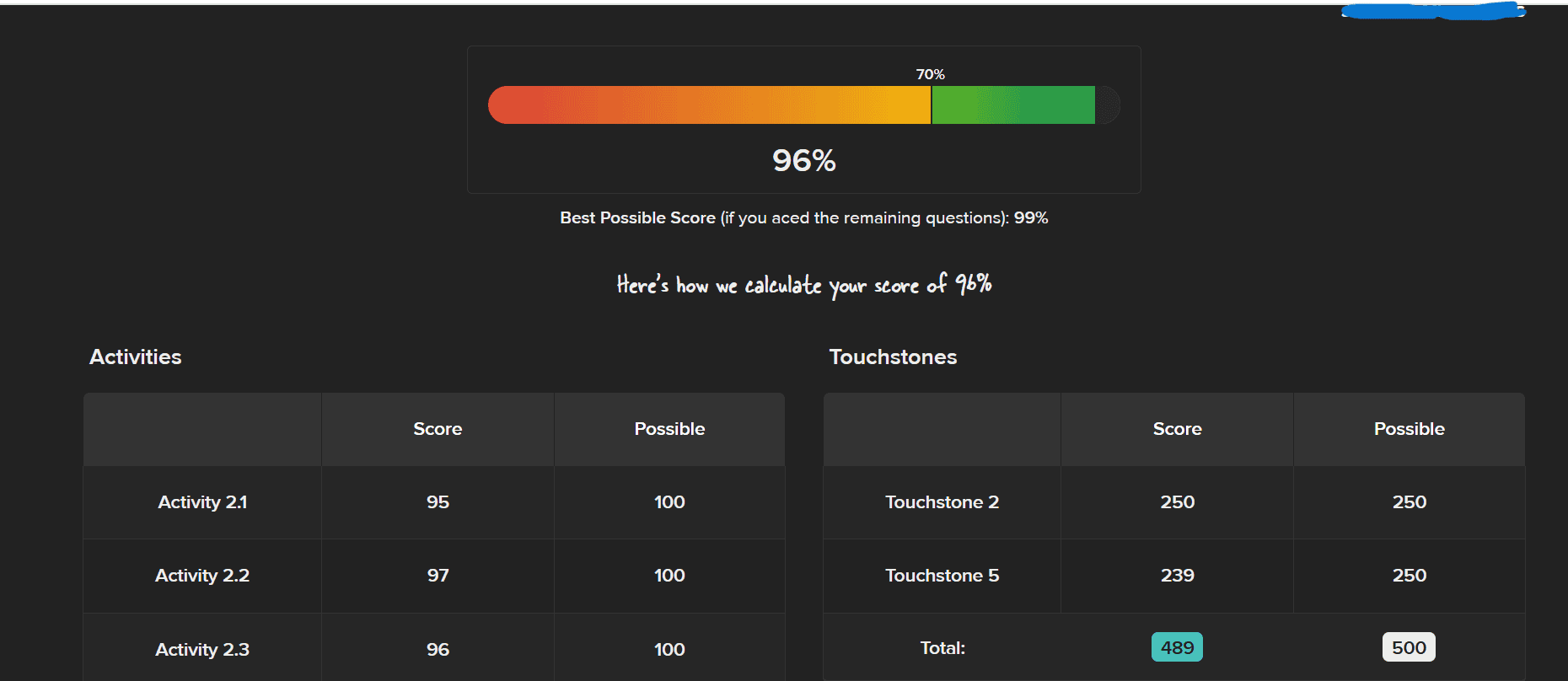
The two Touchstone assignments are the most challenging part of Sophia Chemistry Lab. Each is worth 250 points and requires formal scientific writing.
Touchstone 2: Ionic and Covalent Bonds
- Based on Activity 2.5 Labster simulation
- Full lab report format: hypothesis, methodology, data analysis, conclusions
- Explain the difference between ionic and covalent bonding
- Connect experimental observations to theoretical concepts
Touchstone 5: The Nitrogen Cycle
- Based on Activity 5.2 Labster simulation
- Analyze environmental chemistry and ecological impact
- Discuss nitrogen fertilizers and sustainability
- Synthesize chemistry concepts with environmental science
Why students struggle: These require scientific writing skills most students haven’t developed. You need proper structure, data presentation, and evidence-based conclusions — not just correct answers.
Warning: AI Detection
Students who use ChatGPT for Touchstones often get flagged and forced to rewrite. Sophia’s graders recognize AI-generated lab reports. See our guide: Can Sophia Learning Detect AI?
Why Sophia Chemistry Is Hard
You’re managing two courses at once. Most students don’t realize Sophia Chemistry uses their full 2-course limit. Coordinating lecture content with lab activities while writing formal lab reports is more than most expect.
The calculations are real. Stoichiometry, pH calculations, gas laws, limiting reactants — these require step-by-step math that many students haven’t done in years.
Labster requires focused attention. The 15 virtual lab simulations aren’t passive. You navigate equipment, follow procedures, and answer embedded quizzes throughout.
Scientific writing is a skill. The Touchstone lab reports require hypothesis statements, methodology sections, data analysis, and evidence-based conclusions. This isn’t multiple choice.
Who struggles most:
- Pre-nursing students who haven’t taken chemistry in years
- Working adults with limited study time
- Students stuck on stoichiometry or pH calculations
- Anyone who’s had a Touchstone flagged for AI
How We Help
We complete both Sophia Chemistry courses from start to finish — or jump in wherever you’re stuck.
What we handle:
- Lecture (CHEM1001): All 12 Challenges + 4 Milestones
- Lab (CHEM1002): All 15 Labster Activities + 2 Touchstone Lab Reports
- Professional scientific writing (100% human, zero AI detection risk)
- Coordination between both courses
Timeline: Most students complete both courses in 5-10 days. Rush options available.
Flexible options:
- Both courses together (most common)
- Lecture only or lab only
- Touchstone lab reports only
- Pick up wherever you’re stuck
| Comparison | FMMC | AI Tools | DIY |
|---|---|---|---|
| AI detection risk | None | High | None |
| Calculation accuracy | Expert-verified | Frequent errors | Varies |
| Lab report quality | Professional | Generic/flagged | Varies |
| Time required | 5-10 days | Still your time | 4-8 weeks |
| Grade guarantee | A/B or refund | None | None |
Ready to Finish Sophia Chemistry?
Tell us which courses you need (lecture, lab, or both) and your timeline. We’ll send a free quote within 24 hours.
Frequently Asked Questions
Do I need both the lecture and lab courses?
Most degree programs require both for a complete 4-credit chemistry requirement (3 from lecture + 1 from lab). Sophia recommends taking them simultaneously. Check with your university to confirm — we frequently help students at WGU, SNHU, and Purdue Global.
How long does it take to finish both courses?
With our help, most students complete both courses in 5-10 days. On your own, expect 4-8 weeks of consistent work. See our guide: How Quickly Can You Finish a Sophia Course?
Can you handle the Labster virtual lab simulations?
Yes. Our chemistry experts are experienced with Labster’s virtual lab platform and complete all 15 activities, including the embedded quizzes.
Do you write the Touchstone lab reports?
Yes. We write both Touchstones (Ionic and Covalent Bonds, The Nitrogen Cycle) with proper scientific formatting — hypothesis, methodology, data analysis, and conclusions. 100% human-written, zero AI detection risk.
What if I only need help with part of the course?
We offer flexible options: both courses together, lecture only, lab only, just the Touchstones, or picking up wherever you’re stuck. Tell us what you need.
Will AI tools work for Sophia Chemistry?
Risky. AI makes calculation errors in stoichiometry and pH problems, and AI-generated lab reports often get flagged for rewrite. See: Can Sophia Learning Detect AI?
Will my school accept Sophia Chemistry credits?
Sophia Chemistry is ACE Credit Recommended and accepted at 1,000+ colleges. Always confirm with your school’s registrar before enrolling.
What if I’ve already started the courses?
No problem. We can jump in at any point and complete the remaining work. Just tell us what you’ve finished and we’ll handle the rest.
Related Resources
Sophia Learning:
- Sophia Learning Help & Answers (Hub)
- Can Sophia Learning Detect AI?
- How Quickly Can You Finish a Sophia Course?
- Is Sophia Learning Legit?
Other Chemistry Help:
External Sources:
- Sophia: Introduction to Chemistry (Official)
- Sophia: Introduction to Chemistry Lab (Official)
- ACE Credit Recommendation
See what our clients say | View pricing | Our guarantee